Introduction
20% Time is a project popularized by Google in which the company allows its employees to invest 20 percent of their work time in a project they are truly passionate about. The movement has spread globally, especially in schools, where teachers are allotting 20 percent of class time for students to pursue their individual passions independent of the school curriculum. In my anatomy class, we have been asked to answer the question, "How will we enhance our world?"For my 20% Time Project, I chose to build a mobile, affordable blood pressure monitor and a corresponding smartphone application. The device and application will work together to collect, monitor, and assess data from the user. I chose this project because I have always had a passion for healthcare, engineering, and computer science. I am enhancing my world by creating affordable, accessible healthcare for people with chronic heart problems. Many of my own family members suffer from heart diseases, and a mobile device could help them monitor their blood pressure frequently and easily. With this feedback they can stay informed and take subsequent measures to change their exercise and diet regimens to improve their blood pressure.
My goals are provided in the photo below.

I will measure my progress through my goal setting sheet, as well as through the functionality of my device and application. If the blood pressure monitor and smartphone application are functioning as I stated they would on my goal sheet, then I am on track with the progress of my project.
Goal #1
My goal for the last two weeks was to research potential cheap materials I could use to mobilize a standard blood pressure monitor and read tutorials on mobile health devices and Bluetooth connection to prepare to actually build the device. For the most part, I was successful in my endeavor. I was able to find many materials for a low cost, fitting my plan of making the device affordable and accessible. I plan to manipulate a manual pump blood pressure, as these are the cheapest for about $10 on Amazon. I am also getting a pressure sensor that will connect to the cuff and microcontroller, transmitting pressure data between the two devices. The sensor is relatively inexpensive, at about $13. Finally, I plan to use a microcontroller to mobilize the blood pressure monitor, the Simblee Arduino. This will take the pressure sensor's information and send the data to the phone via Bluetooth. This is slightly more expensive, as it costs about $35. However, I believe it will be well worth the expense; if my project design ever goes commericial, the microcontroller's price will drastically go down, hopefully ensuring the monitor will still be relatively cheap.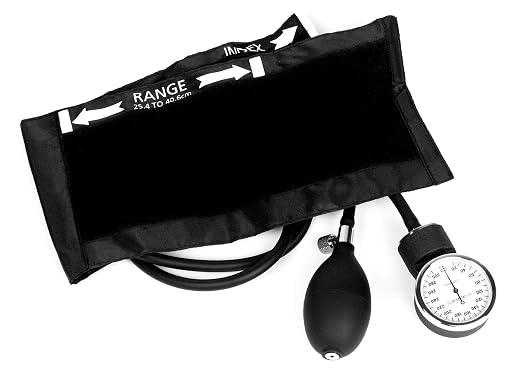


Furthermore, I found research journals on similar projects like mine. One journal, titled Low-Cost Blood Pressure Monitor Device for Developing Countries, created a similar blood pressure monitor device. I plan to build off of their achievements and create a more advanced application and device.
I have experienced a few setbacks, such as the shipping time of the supplies. Although this does not hinder my first goal, it may setback my next goal. The materials will not come in for another week, and the Thanksgiving holidays may push it back further. However, in the time I wait on my materials I plan to research more in-depth so I have all the knowledge necessary when the time comes to build my monitor.
My next step is conducting more research and familiarizing myself with the circuitry necessary to build this device, as I have had no electrical engineering experience prior to this project. The next goal is to actually build the hardware for the blood pressure monitor to wirelessly connect to the smartphone.
I have learned that electrical engineering is more complex than merely soldering two wires together; the entire circuitry for the microcontroller and pressure sensor is already far beyond my limited knowledge of electrical circuitry. I have also learned that I truly have a passion for electrical engineering despite my inexperience. Even with the daunting task in front of me, I remain excited in the face of the complex hieroglyphics of the circuit blueprints and the intricacies of these miniature metal bits. I hope to carry this enthusiasm within everything I do in school, at home, and around my community even though it may not be directly related to engineering. I feel childish wonder and enthusiasm for this project, and I believe over the years I have lost that excitement and heart in the things I do. With this project, I hope to return to that positive state of mind.


This comment has been removed by the author.
ReplyDeleteThis comment has been removed by the author.
ReplyDeleteFirst of all, WOW!!! This is a really amazing idea and i wish the best of luck to you! My only question is how are you going to create the app and then Bluetooth it to your monitor?
ReplyDeleteAustin B.
I like where your project is going and look forward to seeing the end result. My mom currently is in the healthcare business and maybe she will use your app in the future. How are you going to make the app and apply it to the blood pressure monitor? Keep up the good work! -Alex B.
ReplyDeleteI think the project you have chosen is very good and I like that you're making it because like you said some of your family members have heart diseases. I think that the only advice I can give you is to maybe create little goals in the two weeks before your goal is complete. How will you do your next step? -Sabrina C.
ReplyDeleteIt is obvious that you have spent time planning out your project. You are off to a good start and I think you have a fantastic idea. I could have used your app over winter break so that I could have checked my son's blood pressure. The only thing I could do was check his heart rate with my phone. Your blog post was well written and very descriptive. Keep up the good work.
ReplyDelete